VIEW OUR 2026 RESTRUCTURED WEBSITE - WHATS NEW FOR 2026
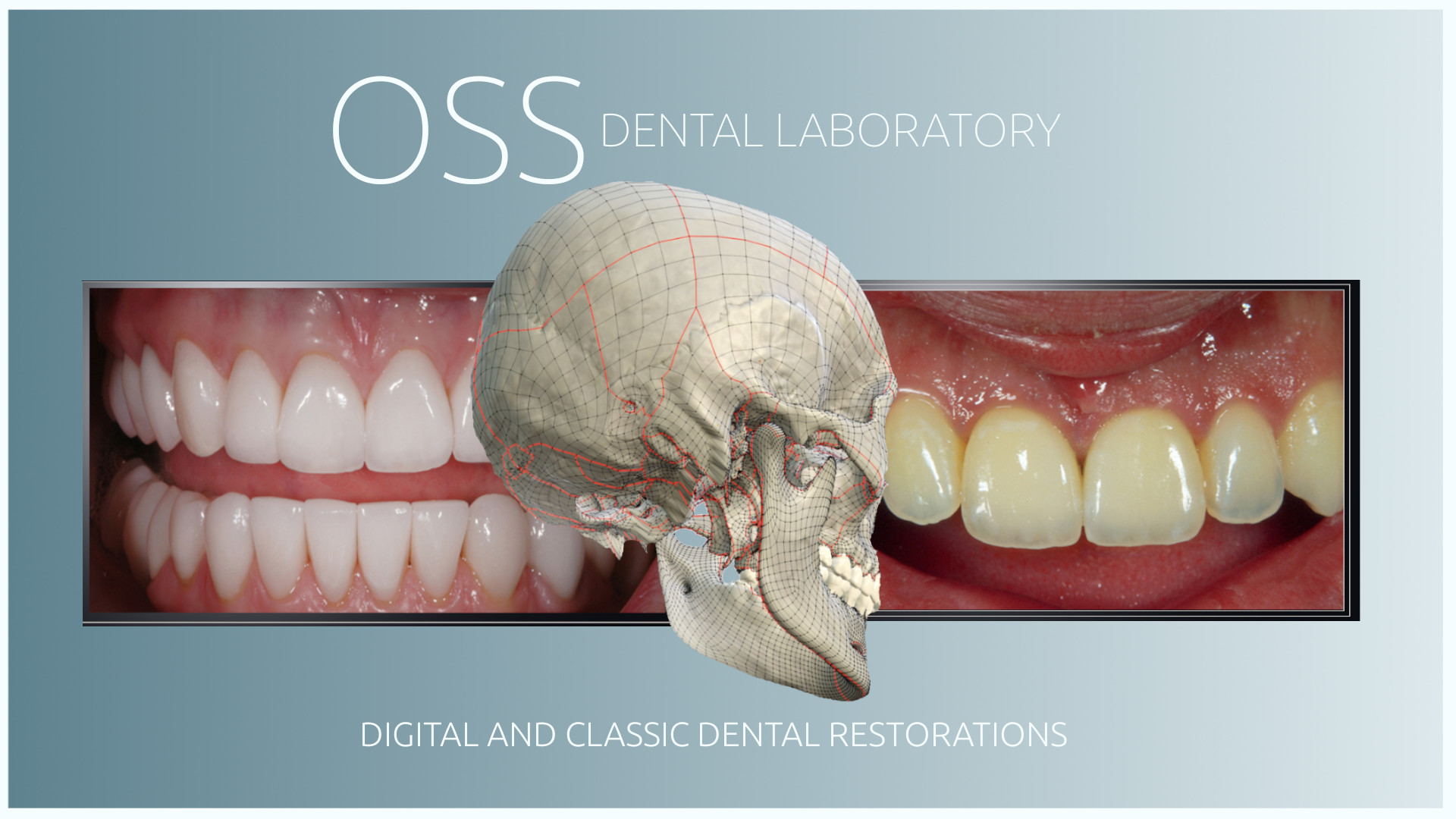
FOR 2026 WE ARE INTRODUCING A NEW RECONSTRUCTION DEVELOPMENT TO OUR MONOLITHIC AOX IMPLANT CASEWORK.
WE ARE NOW WORKING WITH CONE-BEAM CT TO DEVELOP INTERCONDYLAR DISTANCE SETTINGS AND MANDIBULAR POSITIONING USING GEOMETRIC CALCULATIONS
If you are working with CBCT please send the scans to us with your casework as we work with fully functional articulators. This can greatly improve the longevity of your casework to reduce the chance of chipping and fracturing of ceramic.
OPTIONS ARE OFFERED ALSO TO ACCOMMODATE DIFFERENT CONSTRUCTION TECHNIQUES
AND ONE SET OF TEMPORARIES IS INCLUDED
GO TO OUR AOX PAGE FOR MORE DETAILS
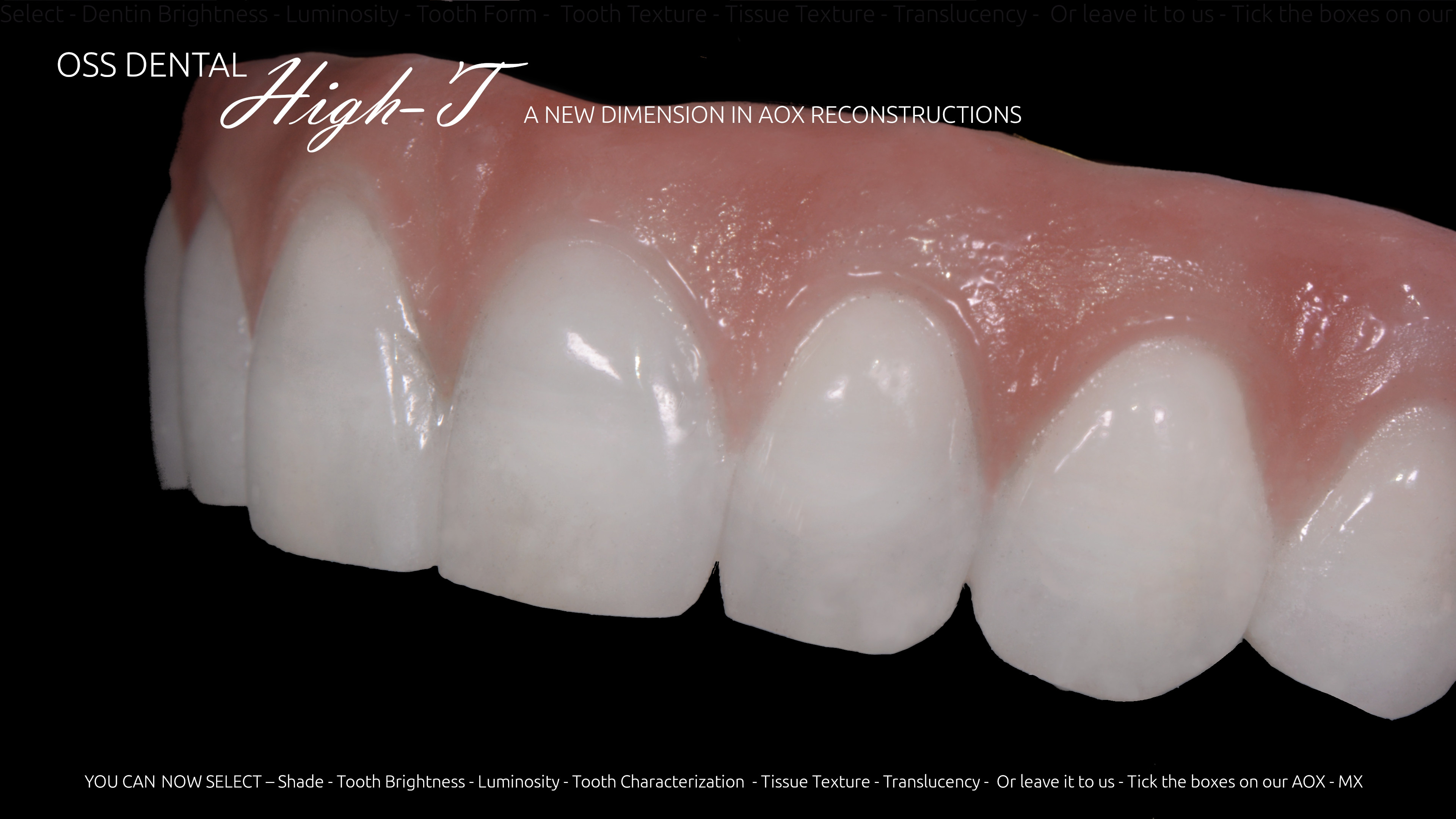
America loves white and bright dental restorations. This image is an example of an AOX Monolithic Implant reconstruction in a standard base shade of BL3 - which includes the incisal third being translucent enamel to establish realism to natural dentition. High-T is about bleach shades being ten percent brighter than the standard shade guide with far less opacity. We can now change not only the standard layering of a bleach shade but also to reduce the opacity bleach shades suffer from.
In 2025 to expand our return to America we began the development to improve bleach shades to offer options that enhance AOX constructions as both dentists and patience often prefer alternative proportional percentages in brightness, luminosity alongside variations in texture levels which all around improves far better optical density to casework. This has opened a door to very individual looking casework with increased attraction. Its not just about white its a seismic shift in how we can layer dental ceramic to suit your patents requests. Last all our work is hand polished to perfect not only the optical surfacing but also to perfect non-visual areas to maintain optimal hygiene. A lot of care and technology at a very favorable price is now offered. This is not stain and glazing, it is classic three dimensional ceramic layering that has more strength and guaranteed longevity.
You can add preferences as well like Ti-base components, branded abutments and titanium bars. However our MUA base AOX is an excellent product with a track record of no failures.
_____________________________________________________________________________________________________________
STILL TAKING SHADES AND SENDING THE WORK BACK FOR ADJUSTMENTS
TRY OUR HCI (HIDDEN COLOR INFORMATION TECHNOLOGY) WHICH ELIMINATES SHADE TAKING
YES YOU NO LONGER NEED TO TAKE A SHADE as that headache is now over.
Take a look at our casework, most if not all is undetectable. Many have tried to resolve the issues of shade taking across three decades but most techniques require too much time, disappointment fees to use software or shade taking gadgets and many developments have not seen widespread use. Most has been a waste of time.Our HCI (Hidden color information) was originally called Color-Mapping and the development slowly began in 2015 when working in the Fort Mojave Desert in Arizona where patients where too far away to reach our laboratory. Now with far more knowledge, more experience and more time spent on its development we now call it HCI.
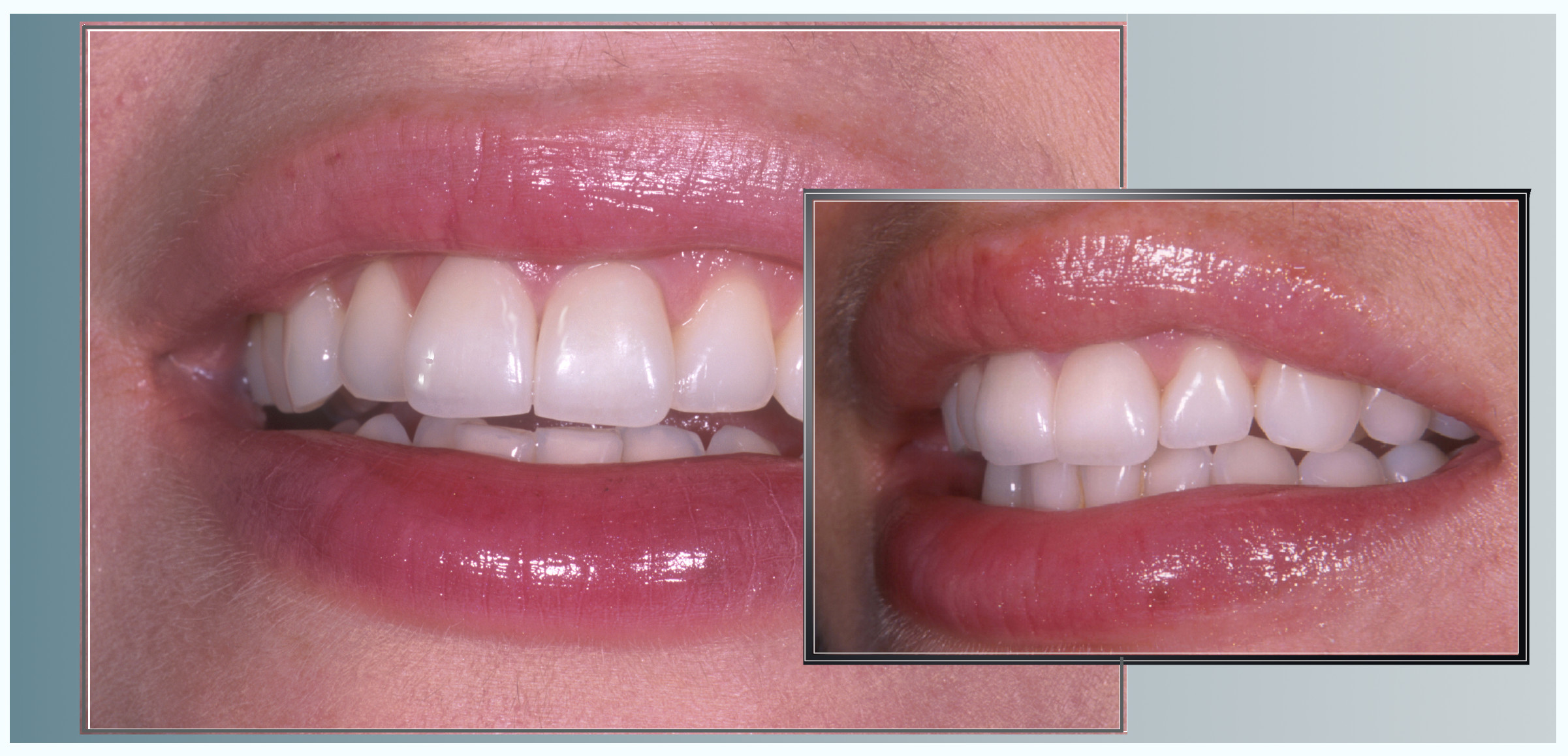
11-21 / 8-9
HCI is exclusive and unique to OSS DENTAL, it is our in-house service. Its included within the unit price.
The past is over and patients no longer need to visit our laboratory, and dentist no longer need to take a shade and try and communicate what there are seeing. It never really worked, ever as too many variables exist.
All we need now is specific pictures we can use to process in a software adaption technique. No white balance is required either, just RAW or NEF files are required, and the location of the patients residence as we need to know the latitude. Thats all nothing else.
In 1998 I began a global light study to measure average UV light values which ended in 2005. General daylight is an hour long variable as daylight is a constant at twelve hours a day at the Equator and night light is 99% dark at midnight.
In europe around fifteen hours a day and in Finland where I started this study was averaging twenty hours a day. In 2005 I began to put this together into a color map based on averages by determining UV light inclusions.
To explain this in simple terms, an Emax unit in London will look more dull at midday and far brighter at midday in Las Vegas on the same day and at the same season in the year.
Or why is it a dentist will take the shade A3 in the summer but choose D3 in the Winter. Both are due to day-light values (lumens) and UV energy in Ev (electron-volts) variables related to latitude. So how we load the ceramic needs to be understood to reduce optical opacity balanced to translucency and latitude is the indicator to adjust the ceramic.
All the single unit custom work presented on our website was calibrated to location, not season or time of day and but an average. HCI then is a process to follow three dimensional layering maps.
Ninety-five percent of our case images on this website is undetectable. We now use what the camera saw not what you think you are seeing. The solution came from a light study we undertook from 1996 to 2001 that covered most of the Northern Hemisphere down to almost the Equator. Go to our HCI page for more details in how you can use this service we provide.
GO TO OUR SERVICES FOR OTHER DENTAL RESTORATIONS WE UNDERTAKE
_____________________________________________________________________________________________________________
+1 702 487 0099
Contact:
contact@ossdental.com
All images and STL files up to 70 MB can be uploaded to our email address:
contact@ossdenta.com
Location:
5730 Skye Pointe Drive
Unit #101
Las Vegas
89130 - NEVADA
USA
Web-Ver. 001 | 24-03-2025

Copyright OSS DENTAL - All Rights Reserved - 2024
Copyright Website construction and photography - OSS-DENTAL - 2024 All Rights Reserved
YES YOU NO LONGER NEED TO TAKE A SHADE as that headache is now over.
Take a look at our casework, most if not all is undetectable. Many have tried to resolve the issues of shade taking across three decades but most techniques require too much time, disappointment fees to use software or shade taking gadgets and many developments have not seen widespread use. Most has been a waste of time.Our HCI (Hidden color information) was originally called Color-Mapping and the development slowly began in 2015 when working in the Fort Mojave Desert in Arizona where patients where too far away to reach our laboratory. Now with far more knowledge, more experience and more time spent on its development we now call it HCI.
11-21 / 8-9
HCI is exclusive and unique to OSS DENTAL, it is our in-house service. Its included within the unit price.
The past is over and patients no longer need to visit our laboratory, and dentist no longer need to take a shade and try and communicate what there are seeing. It never really worked, ever as too many variables exist.
All we need now is specific pictures we can use to process in a software adaption technique. No white balance is required either, just RAW or NEF files are required, and the location of the patients residence as we need to know the latitude. Thats all nothing else.
In 1998 I began a global light study to measure average UV light values which ended in 2005. General daylight is an hour long variable as daylight is a constant at twelve hours a day at the Equator and night light is 99% dark at midnight.
In europe around fifteen hours a day and in Finland where I started this study was averaging twenty hours a day. In 2005 I began to put this together into a color map based on averages by determining UV light inclusions.
To explain this in simple terms, an Emax unit in London will look more dull at midday and far brighter at midday in Las Vegas on the same day and at the same season in the year.
Or why is it a dentist will take the shade A3 in the summer but choose D3 in the Winter. Both are due to day-light values (lumens) and UV energy in Ev (electron-volts) variables related to latitude. So how we load the ceramic needs to be understood to reduce optical opacity balanced to translucency and latitude is the indicator to adjust the ceramic.
All the single unit custom work presented on our website was calibrated to location, not season or time of day and but an average. HCI then is a process to follow three dimensional layering maps.
Ninety-five percent of our case images on this website is undetectable. We now use what the camera saw not what you think you are seeing. The solution came from a light study we undertook from 1996 to 2001 that covered most of the Northern Hemisphere down to almost the Equator. Go to our HCI page for more details in how you can use this service we provide.
GO TO OUR SERVICES FOR OTHER DENTAL RESTORATIONS WE UNDERTAKE
_____________________________________________________________________________________________________________
+1 702 487 0099
Contact:
contact@ossdental.com
All images and STL files up to 70 MB can be uploaded to our email address:
contact@ossdenta.com
Location:
5730 Skye Pointe Drive
Unit #101
Las Vegas
89130 - NEVADA
USA
Web-Ver. 001 | 24-03-2025
Copyright OSS DENTAL - All Rights Reserved - 2024
Copyright Website construction and photography - OSS-DENTAL - 2024 All Rights Reserved
Take a look at our casework, most if not all is undetectable. Many have tried to resolve the issues of shade taking across three decades but most techniques require too much time, disappointment fees to use software or shade taking gadgets and many developments have not seen widespread use. Most has been a waste of time.Our HCI (Hidden color information) was originally called Color-Mapping and the development slowly began in 2015 when working in the Fort Mojave Desert in Arizona where patients where too far away to reach our laboratory. Now with far more knowledge, more experience and more time spent on its development we now call it HCI.
11-21 / 8-9
HCI is exclusive and unique to OSS DENTAL, it is our in-house service. Its included within the unit price.
The past is over and patients no longer need to visit our laboratory, and dentist no longer need to take a shade and try and communicate what there are seeing. It never really worked, ever as too many variables exist.
All we need now is specific pictures we can use to process in a software adaption technique. No white balance is required either, just RAW or NEF files are required, and the location of the patients residence as we need to know the latitude. Thats all nothing else.
In 1998 I began a global light study to measure average UV light values which ended in 2005. General daylight is an hour long variable as daylight is a constant at twelve hours a day at the Equator and night light is 99% dark at midnight.
In europe around fifteen hours a day and in Finland where I started this study was averaging twenty hours a day. In 2005 I began to put this together into a color map based on averages by determining UV light inclusions.
All the single unit custom work presented on our website was calibrated to location, not season or time of day and but an average. HCI then is a process to follow three dimensional layering maps.
Ninety-five percent of our case images on this website is undetectable. We now use what the camera saw not what you think you are seeing. The solution came from a light study we undertook from 1996 to 2001 that covered most of the Northern Hemisphere down to almost the Equator. Go to our HCI page for more details in how you can use this service we provide.
GO TO OUR SERVICES FOR OTHER DENTAL RESTORATIONS WE UNDERTAKE
_____________________________________________________________________________________________________________
+1 702 487 0099
Contact:contact@ossdental.com
All images and STL files up to 70 MB can be uploaded to our email address: contact@ossdenta.com
Location:
5730 Skye Pointe Drive
Unit #101
Las Vegas
89130 - NEVADA
USA
Web-Ver. 001 | 24-03-2025
Copyright OSS DENTAL - All Rights Reserved - 2024
Copyright Website construction and photography - OSS-DENTAL - 2024 All Rights Reserved